Expert SEO Support for DA and DR Growth
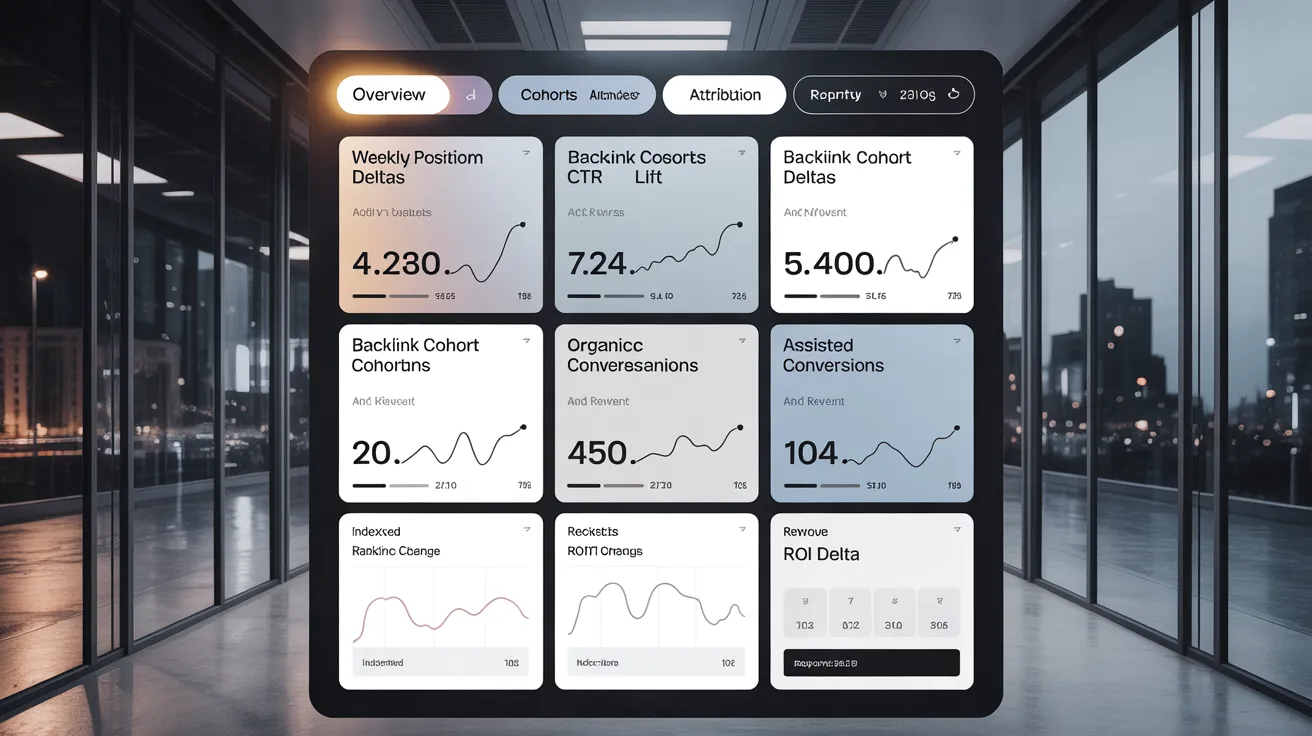
Gain real gains from keyword-targeted backlinks by earning editorial, contextually relevant anchors that align with search demand and link to high-intent pages. Prioritize topically authoritative domains, in-body placement, and balanced anchors: 60–80% branded and naked, 10–30% partial, up to 10% exact. Prospect competitor gaps, present value-led assets (unique data, tools, content hubs), and maintain steady link velocity. Measure weekly position deltas, CTR, sessions, assisted conversions, and revenue with cohort tagging and blended attribution. Test anchors, optimize content, and double down on winners to execute the full playbook.
Main Points
The Significance of Keyword-Backed Links for Search Rankings and Revenue
While backlinks come in many types, keyword-backed links move the needle because they enhance topical relevance and intent, accelerating both rankings and revenue. When anchor text aligns with search demand, you indicate keyword relevance to crawlers and enhance query-document alignment. That increases click-through and decreases bounce, improving engagement signals that relate to higher positions.
You'll notice compounding gains: increased qualified impressions, stronger non-branded visibility, and improved assisted conversions. Align anchors to high-intent pages, then measure position deltas, CTR shifts, and conversion rate changes. Leverage revenue attribution to tie each acquired link to downstream pipeline: assisted conversions, average order value, and LTV. Prioritize anchors that fill topical gaps and strengthen product-led queries. Fine-tune ratios to preserve natural profiles, track cohort performance, and redirect budget toward anchors generating measurable ROI.
Defining “Quality” in Backlinks: Relevance, Authority, and Placement
Given that not all links influence metrics, define backlink quality by three levers you can assess and refine: relevance, authority, and placement. Start with semantic relevance: links should derive from pages tightly aligned to your target query and context. Leverage topical authority to give preference to domains demonstrably expert in your niche; higher topical scores correlate with better ranking lift. Measure authority with domain and page-level data (organic visits, referring domains, impression metrics), not vanity metrics alone.
Link placement is essential: pursue editorial placement within primary content, in prominent positions, accompanied by related entities. Don't use footers, sidebars, or community content zones. Observe link velocity to make growth appear natural and sustained, not spiky. Track impact using impressions, average position, and assisted conversions to confirm that each acquired link compounds measurable results.
Anchor Text Approach: Varieties, Proportions, and Organic Diversity
You'll calibrate anchor text by balancing exact-match and partial keywords with branded anchors and naked URLs to spread risk and signal relevance. Benchmarks show lower-risk profiles depend predominantly on branded/naked (60–80%), medium on partial (10 to 30 percent), and conservative on exact-match (0 through 10%) according to niche competition. Measure ratios monthly and adjust acquisition to fix over-optimization before it suppresses rankings.
Exact-Match versus Partial
Even when your content should rank, anchor text balance can significantly impact link performance. Exact match anchors indicate strong topical alignment, but overuse leads to exact match pitfalls: volatility, manual reviews, and suppressed gains. Partial match anchors broaden relevance while minimizing footprint risk. Aim for a natural spectrum determined by intent, page type, and competitive density.
Measure yourself against SERP leaders: measure their anchor distributions, then adjust yours 10–30% partial, 1–5% exact on commercial pages, with the rest varied using topical variants and long-tail modifiers. Employ semantic clustering to map related phrases and cycle anchors that represent entities, attributes, and problems solved. Emphasize links from contextually rich pages where content reinforces your target terms. Analyze anchor ratios, anchor-page fit, and ranking deltas to iterate fast and evade penalties.
Branded URLs and Naked URLs
Shift anchor profiles towards safety and authority by leveraging branded and naked URL anchors—the most secure signals in competitive SERPs. Deploy your company name, variants, and clean URLs to develop trust while keeping topical relevance. Branded anchors correspond to entity signals, amplify brand mentions, and reduce volatility from exact-match pushes. Naked URLs capture links where publishers steer clear of promotional copy, yet still transmit PageRank and reinforce navigational intent.
Carry out meticulously: normalize methodologies, trailing slashes, and parameters through address normalization to avert dispersing equity. Merge homepage and key hub URLs to extend crawl paths. Secure co-citations by matching branded anchors near keyword-rich context. Audit anchor distributions, recognize overly optimized clusters, and substitute problematic text with brand-first anchors. Track ranking deltas, referring domains, and entity panels to demonstrate impact.
Safe Ratio Guidelines
While anchor text ratios aren't applicable to everyone, you reduce risk and compound gains by structuring your profile against top-three competitors and broad industry baselines. Analyze distributions, then set guardrails. Target read more mostly branded and naked URLs, with partial-match anchors trailing, and exact-match used minimally. Fine-tune by page type and intent: commercial pages can accommodate slightly higher exact-match, but keep variance narrow.
Measure anchor text turnover rate each month. If exact/partial spikes quicker than branded, reduce. Add co-occurrence signals (topical terms around links) to dilute risk without losing relevance. Use internal links to reinforce target anchors so external links stay conservative. Track SERP volatility, toxicity scores, and link velocity together. If rankings rise while risk metrics remain stable, increase exact-match marginally; if volatility rises, reweight toward branded and generic.
Prospecting Techniques: Discovering Contextually Relevant Link Opportunities
You start by running competitor link mapping to determine which domains, pages, and anchor texts actually move rankings in your industry. Then you use prospect filtering based on relevance to score possibilities by semantic fit, authority, and likelihood of placement. This dual-step methodology identifies quality prospects, eliminates inefficient outreach, and improves link acquisition efficiency.
Rival Backlink Profiling
Map competitor backlinks to identify contextually relevant prospects with the highest chance of converting into links. Begin by exporting referring domains for 3–5 top competitors, then filter duplicates and segment by authority, traffic, and index status. Assess the link gap: which domains link to competitors but not you. Target high-authority pages driving organic clicks to relevant keywords.
Analyze anchor overlap to reveal patterns: consistent anchor types, exact-match frequency, and semantic variants. Identify sources using anchors you can duplicate naturally on matching assets. Inspect placement type (content-based, resource lists, features), outbound link count, and update recency to calculate attainable win rates.
Confirm fit by correlating page intent and keyword alignment, then craft messaging that references the linking page’s context. Measure conversion rates per domain type to optimize future prospecting.
Theme-Based Prospect Filtering
Once you've quantified the link gap and anchor patterns, concentrate on topical prospect filtering to boost win rates and link value. Develop a master list, then score domains by contextual fit, authority, and outbound link hygiene. Apply semantic clustering to group candidates by themes that align with your content silos. Execute intent mapping to match each cluster with pages solving the same user jobs (educational, commercial, transactional). Remove sites whose top traffic or keywords don’t match your target intents.
Strengthen criteria: require topical category match, validated by title tags, internal link hubs, and high-performing URLs. Focus on pages ranking for the same entities and modifiers you target. Verify recency and editorial standards. This approach focuses outreach on publishers where your anchor variants seem native, increases acceptance rates, and strengthens relevance signals.
Safe Link Acquisition Approaches: Editorial, Outreach, and Digital PR
Frequently the most secure backlink acquisitions originate from approaches that reflect how authority naturally accumulates: editorial references, strategic outreach, and digital PR. You earn durable links by aligning with editorial guidelines, demonstrating relevance, and eliminating friction for publishers. Begin with ethical outreach: tailor value, cite data, and map anchor text to page intent. Track reply rates, acceptance rates, and published-link velocity to optimize.
Emphasize relationship building with editors and contributors; steady, context-rich pitches convert 2–3x higher than cold blasts. Implement a tight press protocol: timely angles, succinct summaries, quotable insights, and source files ready. Confirm placements by reviewing traffic, indexation, and topical proximity. Avoid incentives, footprints, and link schemes. Track impact via assisted sessions, ranking lift for target terms, and referring domain quality shifts.
Content Resources That Attract Links: Data-Driven Tools and In-Depth Topics
While links depend on relationships, they grow fastest when your content becomes a citation magnet—think proprietary data, interactive tools, and comprehensive topical hubs. Develop assets that solve real problems and quantify impact. Begin with original research: run surveys, analyze anonymized usage data, or model trends. Release clear charts, downloadable datasets, and concise takeaways. Report cadence counts—annual or quarterly updates maintain velocity.
Deploy enduring tools that decrease time or risk: calculation tools, verification tools, templates, schema generators. Track usage, task completion, and assisted conversions to establish ROI, then optimize.
Establish subject-based hubs that cover an whole problem space. Implement internal linking, FAQs, and comparative guides to address long-tail queries. Measure against SERP intent, cover gaps other sites miss, and ensure technical polish: speedy load, accessible UX, and structured data.
Assessing Link Sources: Metrics, Red Flags, and Manual Review
Before pursuing any backlink opportunity, assess the source with objective signals, then validate manually. Lead with domain-level metrics: organic traffic trajectory, keyword expansion, and topical relevance. Prioritize steady or rising traffic signals, diversified keywords, and clean anchor distributions. Examine link velocity: consistent, non-spiky acquisition indicates authenticity. Analyze referring domain quality, indexation rate, and historical volatility to avoid churn-prone sites.
Detect red flags: orphaned posts, excessive outbound links, sitewide paid anchors, spun content, and mismatched author expertise. Review internal linking, editorial standards, and publication cadence. Manually examine two to three recent articles; validate bylines, About pages, and contact transparency. Assess technical health—Core Web Vitals, HTTPS, and crawl depth. Leverage sampling to project expected link equity transfer and emphasize sources with defensible risk profiles.
Execution Workflow: From Contact Templates to Follow-up Communications
You've identified and qualified prospects; now translate that analysis into a repeatable outreach engine that generates links. Build modular templates: subject, hook, asset, ask, and soft CTA. Customize with one line tied to intent signals. Create a template cadence: Day 0 initial, Day 3 nudge, Day 7 value-add, Day 14 breakup. Execute A/B on subject lines, asks, and CTAs; promote winners after over 100 sends.
Organize by segment—editors vs. contributors—so proposals correspond to incentives. Optimize send windows using reply timing data: schedule initial touches when opens peak, then queue follow-ups 4 business hours after non-opens. Log objections and map micro-replies to fast paths: share asset, propose anchor, confirm turnaround. Keep your CRM minimal: status, last touch, owner, next action. Streamline, but always maintain human connection.
Monitoring Performance: Key Performance Indicators, Attribution Models, and Iterative Processes
Even as campaigns scale, you require hard proof they move rankings and revenue. Define KPIs that connect to outcomes: referring domains by authority, anchor-text distribution, target-page rankings, organic sessions, assisted conversions, and pipeline-influenced revenue. Create baselines, then track weekly deltas and confidence intervals.
Deploy conversion attribution that combines position-based and data-driven models to measure backlink-assisted lifts across discovery, consideration, and purchase. Mark outreach waves and link placements so you can link specific backlinks to target-page performance.
Perform cohort analysis by batch link date, domain tier, and anchor text intent. Compare time-to-impact, degradation curves, and marginal ROI. Establish iteration cycles: test anchor variations, link speed, and content updates; implement gradually, measure fast, focus on winners. Monitor for KPI regression and redistribute budget in real-time.
Questions & Answers
How Do Backlink Strategies Differ for Ecommerce vs. Saas Business Models?
The differences lie in objectives, anchor text, and content you focus on. For online retail, you create backlinks to product listings, product categories, and comparison guides, using purchase-intent anchors to increase SKU visibility and sales conversions. For SaaS, you focus on industry authority, third-party connections, and free-to-paid paths, acquiring links to product features, use cases, and calculators. You’ll seek out partnership campaigns, API directories, and review platforms. Monitor referring domains, multi-touch conversions, and lifetime value influence to maximize ROI.
What Financial Parameters Realistically Produce Measurable Link-Building Success?
Comparable to ordering a telegram in today's Wi‑Fi world, you’ll need achievable expectations: with a low budget ($500–$1,500/month), you can obtain 2–5 quality links, prioritize DR 40–60, and monitor CAC-to-DR lift. Medium-range ($2,000–$5,000) produces 6–15 links, niche placements and digital PR, and 10–20% traffic increase in 90 days. Enterprise-level spending ($8,000–$25,000+) enables campaigns, unique data assets, 20–60 links/month, and vertical coverage—concentrate on anchor diversity, link velocity, and sales attribution.
How Might Small Teams Automate Link Prospecting Without High-Cost Tools?
Use free tiers and scripts to automate link prospecting. Extract data from Google via SERP APIs, filter by DA/traffic via Open PageRank, and batch-verify emails with Hunter’s free credits. Set up outreach in Google Sheets + Gmail automated emails; A/B test subject lines and content templates. Set up follow-ups via Zapier. Track reply/placement rates, cost per link, and time-to-first-response. Target pages with >500 monthly traffic and topical relevance to maximize win rate and reduce spend.
What Legal or Compliance Problems Can Result From Link Acquisition?
You're exposed to risks such as copyright infringement from utilizing scraped or unlicensed content in outreach, and privacy violations if you store or email personal data without consent. You also risk FTC violation concerns involving paid links, contract breaches from unauthorized brand use, and penalties for manipulative schemes. Reduce risks by obtaining licenses, honoring robots.txt, using opt-in data, documenting consent, labeling sponsored links (rel="sponsored"), and auditing anchor text and domains. Monitor performance to optimize link quality and compliance.
How Do Multi-Language Sites Deal With Anchor Text Spanning Different Languages?
You deal with anchor text by aligning primary keywords to localized anchors for each market, not just literal translations. You enforce translation consistency with glossaries, TM databases, and hreflang-aligned internal links. You analyze SERP intent across locales, confirm CTR and ranking deltas by anchor variant, and circumvent over-optimization by blending branded, generic, and partial-match anchors. You normalize UTM parameters, monitor anchor distributions in GSC, and adjust based on clickshare, impression growth, and conversion lift.
Conclusion
You're not hunting for links—you're creating compounding momentum. Prioritize relevance, high-authority placements, and intelligent anchor text, then grow through methodical prospecting and safe outreach. One key metric: pages containing more backlinks rank higher 91% of the time. That's quantifiable leverage. Create link-worthy resources, vet every source, and maintain a streamlined execution workflow with defined KPIs. Monitor improvements in rankings, traffic, and revenue, then refine. Execute this consistently, and you'll create lasting, compounding SEO ROI.